


Ascend Scaling's Digital Marketing Blog
It's Complicated: Why Every Ontario Business Owner Has a Love/Hate Relationship With Their Website
3 min read posted on 02/01/26
February is the month of relationships. And if we're being honest, Ontario business owners have one of the most complicated relationships imaginable—with their websites.
You know the feeling. Some days, your website is your best employee. It's working 24/7, generating leads while you sleep, answering questions you don't have time for, and making your business look professional to customers you haven't even met yet.
Other days? It's your biggest source of frustration. It's slow. It's outdated. Making a simple change requires calling someone who may or may not respond. And every time you look at it, you think "We really need to fix that... someday."
Welcome to the most common—and most expensive—relationship problem in business: the love/hate dynamic with your website.
Why We Love Our Websites (When They Work)
Let's start with the good parts. Because when your website is working well, it's genuinely transformative for your business.
A professional website builds credibility instantly. When potential customers land on a clean, fast, modern site, they immediately trust you more. It signals that you're established, competent, and worth their time and money.
Your website is also your most tireless salesperson. It doesn't take breaks, doesn't call in sick, and works every single hour of every single day. While you're sleeping, eating dinner, or spending time with family, your website is out there representing your business to anyone who searches for what you do.
And in 2026's challenging Ontario economy—where just 23% of Ontario business owners feel optimistic about the economy and insufficient demand remains the top growth barrier at 54%—having a website that works for you (instead of against you) isn't just nice to have. It's essential for survival.
When your website is doing its job, you love it. It's generating inquiries, converting visitors, and representing your brand exactly the way you want.
Why We Hate Our Websites (Most of the Time)
But then there's the other side. The frustration. The pain points that keep business owners up at night.
Websites are a frustrating pain point for many companies, and overall it can be broken down into many different website pain points. Let's talk about the ones that hit hardest.
"My website takes too long to load."
You know the feeling. You pull up your own site on your phone and watch the loading wheel spin. And spin. And spin. Meanwhile, your potential customer has already clicked back to Google and chosen a competitor whose site loaded instantly.
53% of users abandon a site if it takes longer than three seconds to load. Three seconds. That's how long you have before half your potential customers give up on you entirely.
"I can't make simple changes without paying someone."
This might be the most common source of website hate. You want to update a price, change a photo, or add a new service. Simple stuff. But your website was built years ago by someone who's now impossible to reach, and making even tiny changes requires finding (and paying) a developer.
So the updates pile up. The information gets stale. And your website slowly becomes less and less accurate—which makes you look less and less professional.
"It doesn't work on mobile."
Some features and forms, such as flash and pop-ups, are inaccessible or frustrating on some mobile devices. And when 60% of your website traffic comes from phones and tablets, that's not a minor inconvenience—it's losing you customers every single day.
You pull up your site on your phone and have to pinch and zoom to read anything. Buttons are too small to tap accurately. Forms are impossible to fill out. The experience is so frustrating that visitors just leave.
And you hate that your website is costing you business instead of generating it.
"My competitors' websites look better than mine."
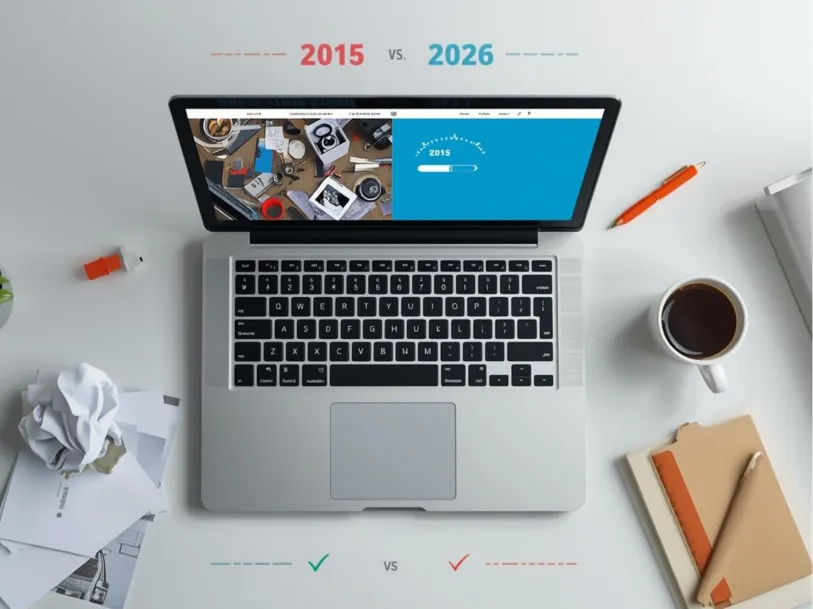
This one stings. You visit a competitor's website and it's modern, fast, professional. Then you look at yours and it feels like a time machine back to 2015.
You're not imagining it. By 2026, search engines like Google have evolved their algorithms to favor exceptional website experiences. Design directly impacts SEO rankings—and by extension, your visibility.
Your outdated website isn't just embarrassing. It's actively hurting your ability to compete.
The Real Cost of This Complicated Relationship
Here's what most Ontario business owners don't realize: This love/hate relationship with your website is costing you more than you think.
The obvious costs are the lost leads. Every visitor who leaves because your site loads too slowly. Every potential customer who chooses a competitor because their website looked more professional. Every mobile user who gives up trying to navigate your clunky interface.
But there are hidden costs too.
There's the mental energy spent worrying about your website instead of focusing on your actual business. More Ontario business owners reported increased stress tied to their work and greater difficulty staying financially stable than their U.S. counterparts—and website frustration is absolutely part of that stress.
There's the opportunity cost of delays. Every month you spend "planning to update" your website is a month you're not capturing the customers actively searching for your services right now.
And there's the credibility cost. When your website doesn't work properly, customers don't think "Oh, they must just have a bad website." They think "If they can't get their own website right, can they handle my project?"
Why This Relationship Feels So Hard to Fix
The reason so many Ontario business owners stay stuck in this love/hate cycle isn't because they don't care about their website. It's because fixing it feels overwhelming.
The traditional web design model makes it worse. Pay $4,000+ upfront. Wait weeks or months for development. Hope the person who built it stays responsive after launch. Pay extra for every update and change.
These challenges and a fear of failure cause many companies to delay making major changes to their websites, so the pain points persist.
So you put it off. "We'll deal with it next quarter." "We'll address it when things slow down." "We'll tackle it next year."
Except next quarter comes and it's still not the right time. Things never slow down. Next year becomes this year and the website is still the same frustrating problem it was before.
Meanwhile, user pain points can grow from minor inconveniences to serious, business-altering problems. What started as "our site is a little slow" becomes "we're losing customers to competitors every day."
What a Healthy Website Relationship Actually Looks Like
Here's the thing: It doesn't have to be this way.
Imagine a website that you actually love—without the hate.
A site that loads in under 2 seconds on any device. That works flawlessly on mobile. That you can update yourself within minutes, or request changes that get handled within 24 hours. That looks modern and professional because it reflects current design standards, not what was trendy five years ago.
A website that generates leads instead of frustration. That builds credibility instead of embarrassment. That supports your business goals instead of holding you back.
That's not a fantasy. That's what websites should be in 2026.
The businesses thriving in Ontario's challenging economy aren't the ones with the biggest marketing budgets or the flashiest offices. They're the ones who figured out that their website is too important to hate—and too critical to ignore.
Breaking the Cycle
The first step to fixing a toxic relationship is admitting there's a problem.
If you feel even a twinge of frustration when you think about your website—if there are things you've been "meaning to fix" for months (or years)—if you're embarrassed to send people to your site because you know it doesn't represent your business well—that's your sign.
The second step is understanding that fixing it doesn't have to be overwhelming.
If you can't afford a total redesign, incremental upgrades and phased improvements can make a world of difference. You don't need to rebuild everything from scratch. You need to address the specific pain points that are costing you customers and causing you stress.
And you need a model that actually works for how real businesses operate.
No massive upfront investment that sits in limbo for months. No disappearing developers who built your site then vanished. No paying hundreds of dollars every time you want to change a phone number.
Just a professional website that works the way it should—representing your business well, performing reliably, and supporting your growth instead of hindering it.
It's February. Let's Talk About Better Relationships.
Ontario businesses are facing enough challenges in 2026. Rising costs, economic uncertainty, increased competition. You don't need your website to be another source of stress and frustration.
Your website should be one of your greatest assets. It should be the part of your business that you love showing off to potential customers—not the part you apologize for.
The love/hate cycle ends when you stop accepting "good enough" and start investing in what actually works.
Not someday. Not next quarter. Not when you finally have time.
Now. In February 2026. While your competitors are still stuck in their own complicated website relationships, you can build something better.
Because the businesses that win aren't the ones with perfect websites. They're the ones who recognized that their website was too important to hate—and did something about it.
Ready to end the love/hate cycle? Ascend Scaling creates professional websites designed for the way real businesses work. No upfront costs. Simple monthly subscription starting at $97/month. Everything included: design, development, hosting, ongoing support, and edits handled within 24 hours. Your website should work for you, not against you.
Apply for a free website redesign consultation and let's build a relationship with your website that you actually love.
Have Your website built Free by industry professionals
Submit your application and our team will review it within 24–48 hours.
About
Service Areas
Contact Us
Copyright © 2026 Ascend Scaling. All rights reserved.
Copyright © 2025 Ascend Scaling. All rights reserved.